Our result distribution in 2019 2024
Our issues in 2019
Some challenges for traditional approach
- Diversity
- Skills, background, motivation, availability, life
- Assessments and Exam
-
- How to evaluate the full range of skills from a 2-hours exam?
- Additive vs deductive assessments.
- Engagement
- Low Engagement (self-efficacy, motivation)
- Poorly characterised grade
- What is the meaning of a Pass? Of a HD?
What is a learning environment?
Content and Skills
Learn
Validate

Resources



Bite-sized parts
Portfolio of assessments





Other People





Some Principles
and a bit of theory
The Two Sigma Problem
Mastery learning
(Bloom, 1968; 1971; Guskey, 2007)
                graph LR
                    A([Module 1]):::node
                    F([Module 2]):::node
                    B[Formative <br/> Assessment <br /> A]:::node
                    D[Corrective]:::node
                    E[Formative<br>Assessment<br>B]:::node
                    subgraph enrichment
                      C[Enrichment Activity]:::node
                    end
                    correction:::fragment
                    enrichment:::fragment
                    A --> B
                    B -->|Pass| C
                    C --> F
                    subgraph correction
                      D --> E
                    end
                    B -->|Fail| D
                    E --> F
                    classDef default font-size: 1.2em;
Differentiating learning
(Barr et al., 2018)
                graph LR
                    A1[Unit 1A]:::precensus
                    A2[Unit 2A]:::precensus
                    A3[Unit 3A]
                    B1[Unit 1B]:::precensus
                    B2[Unit 2B]
                    B3[Unit 3B]
                    subgraph stream 1
                      A1 -->|Pass Test| A2
                      A2 -->|Pass Test| A3
                    end
                    A1 -->|Fail Test| B1
                    A2 -->|Fail Test| B2
                    A3 -->|Fail Test| B3
                    subgraph stream 2
                      B1 -->|Pass Test| B2
                      B2 -->|Pass Test| B3
                    end
                    classDef default font-size: 1.2em;
Pros and Cons of Mastery and Differentiated Learning
- Acknowledge the diversity in our classroom
- Opportunities for correctives
- Risk of elitism
- Workload implications
Co-constructed learning
Co-constructed learning
(Vespone, 2023)
              flowchart LR
                subgraph Outcomes
                direction TB
                  P[Having Purpose] ==> E[Engagement] ==> M[Making Meaning] ==>P
                  S <==> E
                  S[Skill Development] <==> P
                end
                R[Relationships] <==> Outcomes
                Outcomes <==>  Sp[Safe Space]
                classDef default font-size: 1.2em;
Providing Feedback
(Hattie & Timberley, 2007)
Purpose
- Where am I going?
- How am I going?
- Where to next?
Task level
Process level
Self-regulation level
Self level
Content and Skills
Learn
Validate
Resources
Bite-sized parts
Portfolio of assessments
Other People
Portfolio-based assessment
What are our goals?
- Transparency
- How well do students understand their grade? How well can they predict it?
- Fairness
- In what
way are higher grade students
better
than lower grade students? - Accuracy
- How well do our assessments "measure" the students' skills
- Integrity
- How do we know the student did the work?
The portfolio
Single summative assessment.
Explicitly aimed at demonstrating the level of achievement of the ULOs.
How we redesigned out maths assessment
Each module is assessed separately
- Constructively aligned
-
- Assessment drives and supports learning.
- Learning Support help completing assessments
- Summative assessment is delayed
- Students'
skills are not
fixed
until the end of the trimester. - Self-paced and scaffolded
- Students submit their task once they are ready for feedback.
Lesson Reviews
- Student submits their lesson review when it is ready for feedback
- Student receives feedback on their submission.
- Opportunity to resubmit until minimum standards is achieved.
Once the student and tutor agree on the task, the
student includes it into their portfolio, to be
compiled and submitted at the end of the trimester.
Formative assessment process
Must demonstrate the minimum standard for each module:
Show us that you have achieved the learning objectives.
- Must showcase both conceptual and procedural mastery.
- Procedural skills: shown by providing evidence.
- Conceptual skills: shown through a conceptual summary of content
- We provide a randomised quiz to facilitate evaluation of low level procedural skills.
Content and Skills
Learn
Validate
Resources
Bite-sized parts
Portfolio of assessments
Other People
Setting up the learning environment
Clarifying expectations
What does it mean to pass a university maths subject?
| P | Minimum Core Competencies |
|---|---|
| C | Desired Competencies |
| D | Build on/Utilise Competencies |
| HD | Beyond the Content |
Modular Design
Six Steps of Mastery Learning
(Guskey, 2007; Kantathanawat, 2025)
We split each unit into modules.
- Learning Objectives
- Learning Resources and Activities
- Separate formative assessment
- Focused on mastering the Learning Objectives
- Possibility to review/resubmit
- Define Learning Objectives
- Diverse Instructional Methods
- Formative Assessment
- Corrective Feedback
- Reassessment
- Enrichment or Advancement
Co-constructing the modular Design
- The content/skills are split into core and elective content.
- Pass the unit iff they demonstrate their mastery of the entire core content.
- Higher grades by electing to demonstrate additional skills. Can work toward higher levels of complexity, abstraction, etc.
- Highest grades focus on independent learning, creation, communication. Must go beyond what is taught in the modules.
Example: discrete maths
Core
- Number Theory
- Propositional Logic
- Predicate Logic
- Proofs
- Set Theory
- Combinatorics
- Graph Theory
- Sequences
Electives
- Advanced Number Theory
- Advanced Graph Theory
- Complexity Theory
- Mathematical Induction
- LaTeX
Example: Operations Research
Core
Electives
- Optimisation Stream
-
- Linear Programming
- Integer Programming
- Standard Canonical forms
- Graphical Method
- Simplex Method
- Duality Theory
- Branch and Bound
- Computational Packages
- Heuristics Stream
-
- Single State
- Population-based
- Implementation of Single-state
- Implementation of Population-based
Content and Skills
Learn
Validate
Resources
Bite-sized parts
Portfolio of assessments
Other People
Moving away from one-size-fits-all
Learning Resources
Each module comes with its own set of resources.
- Aligned to Learning Objectives.
- All the resources are available from the start.
- Availability in a range of formats (interactive, videos, text).
- Students can work through them at their own pace.
Content and Skills
Learn
Validate
Resources
Bite-sized parts
Portfolio of assessments
Other People
The Nature of support changes
| P | Structured |
|---|---|
| C | Scaffolded |
| D | Self-Directed |
| HD | Negotiated and student-led |
What are classes for?
- Designed to maximise interactions.
- Students work on different topics during the class.
- Other support mechanisms: forums, drop-in…
- Also used to verify the integrity of the work.
Content and Skills
Learn
Validate
Resources
Bite-sized parts
Modules



Portfolio of assessments
Portfolio of tasks


Other People
Seminars, Forums, etc.


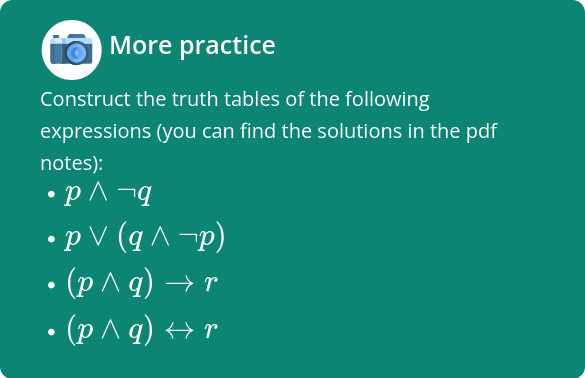
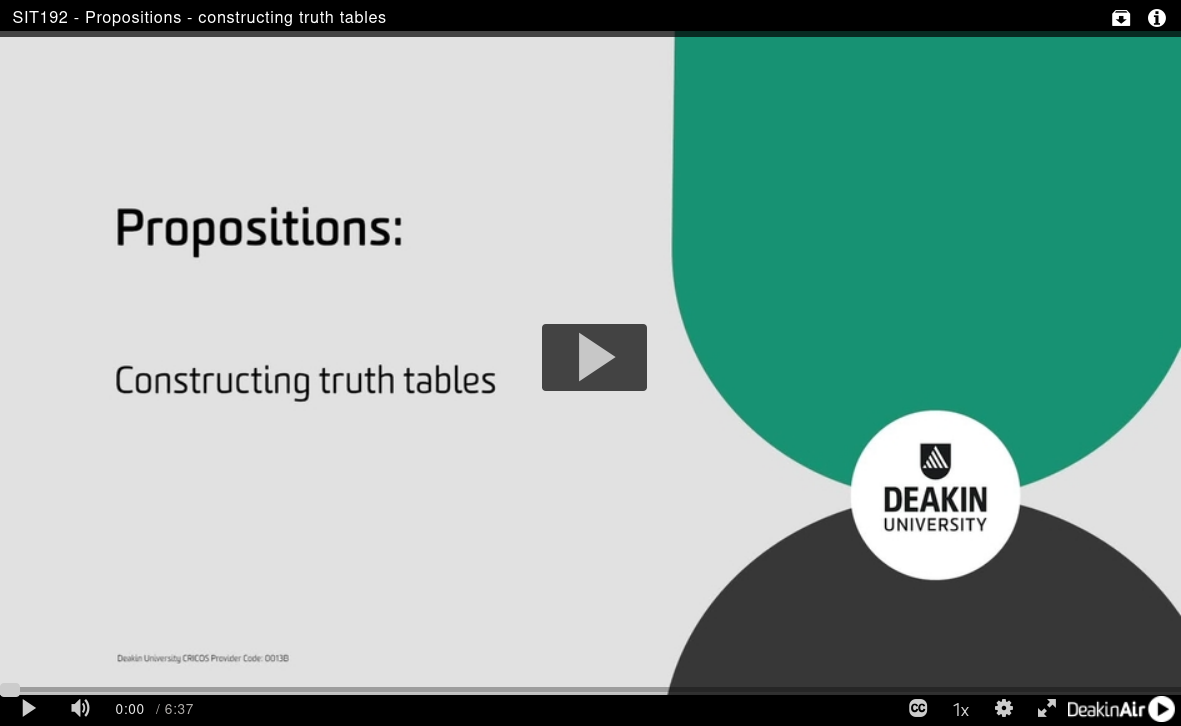
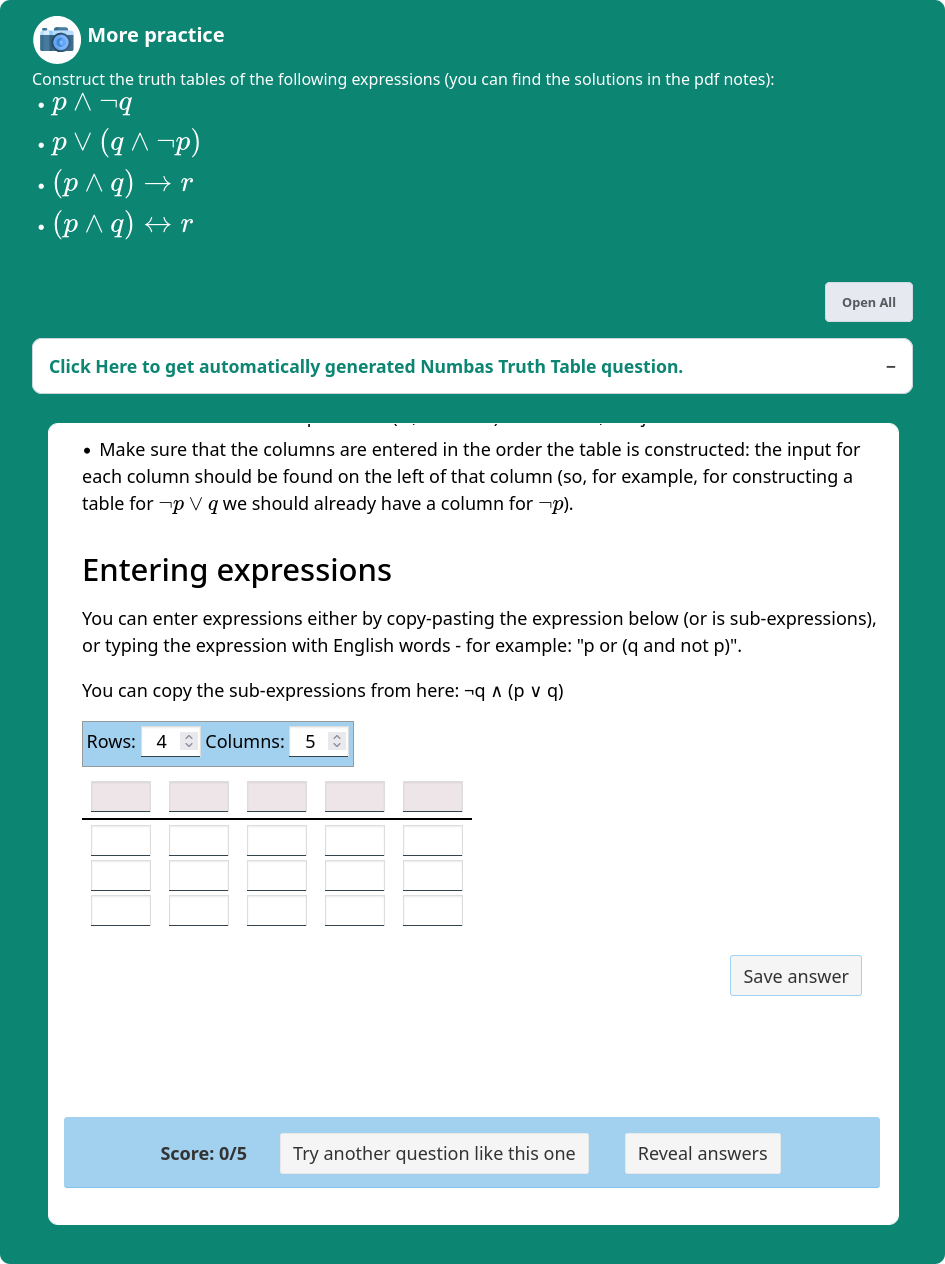
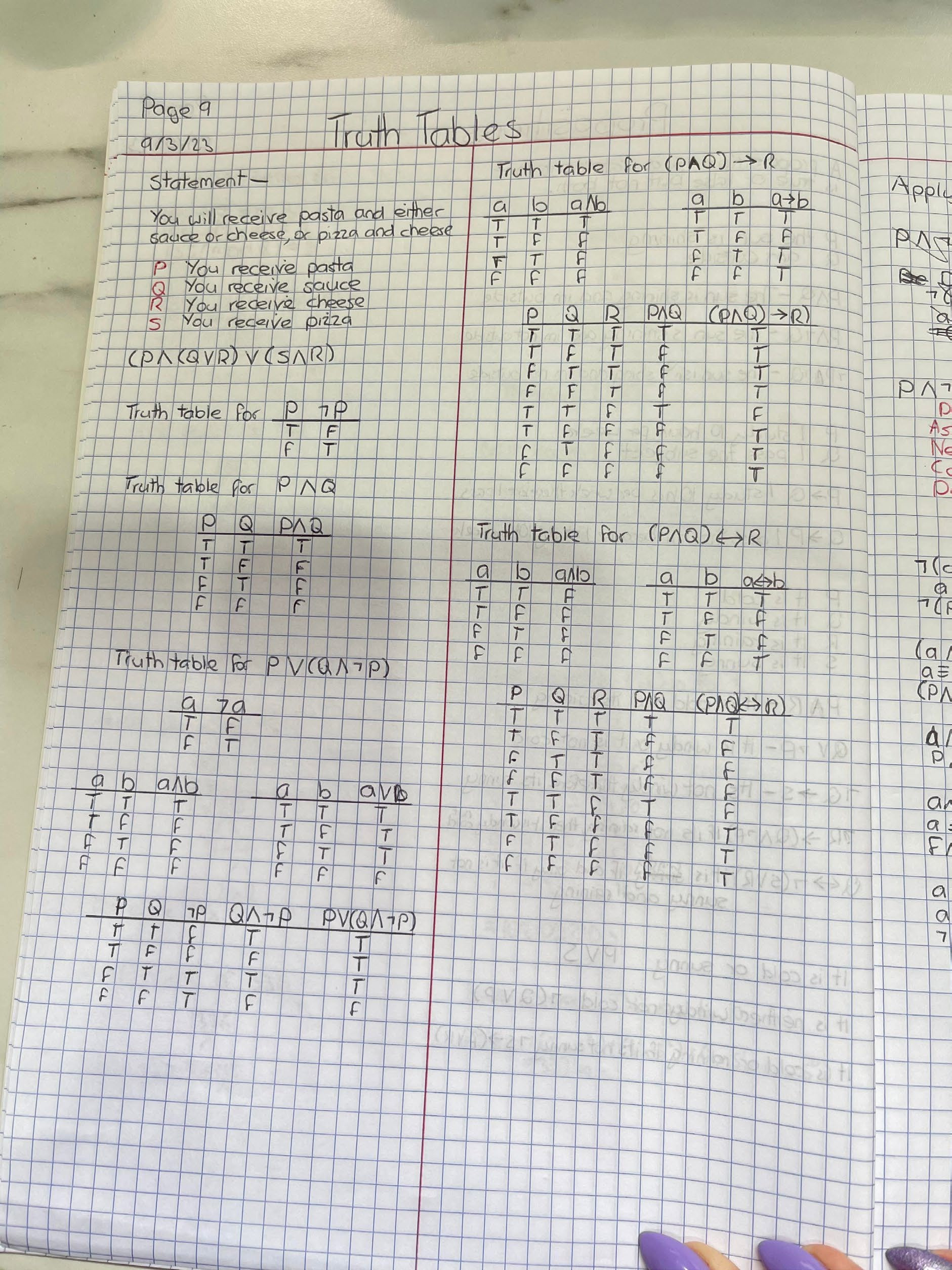
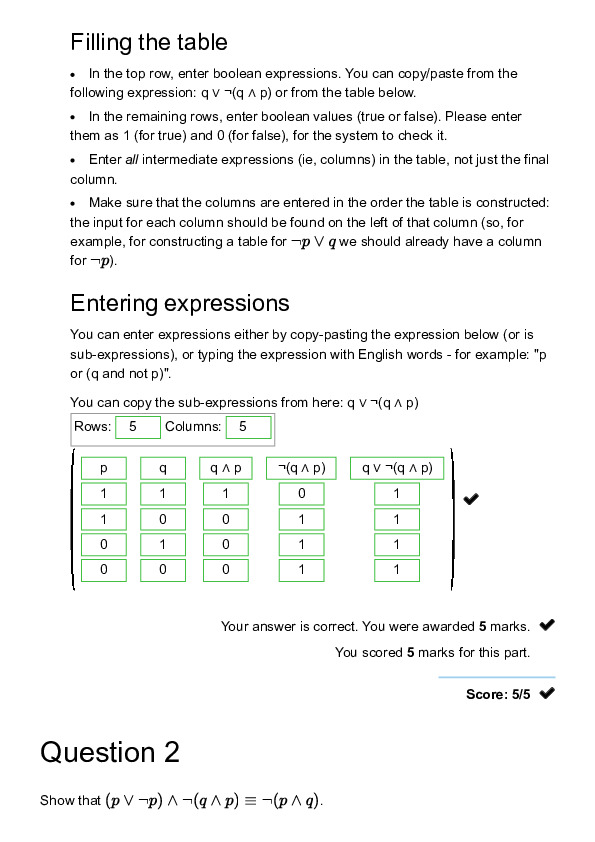
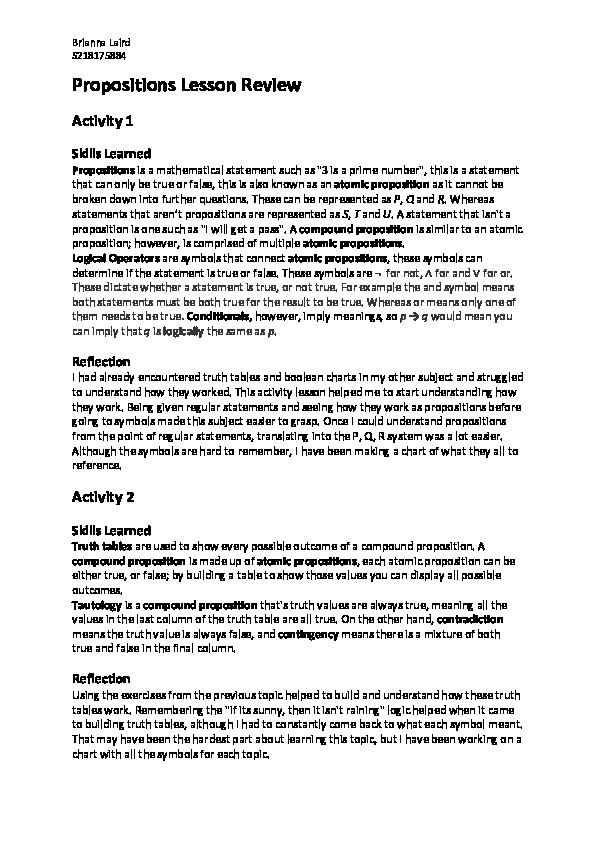
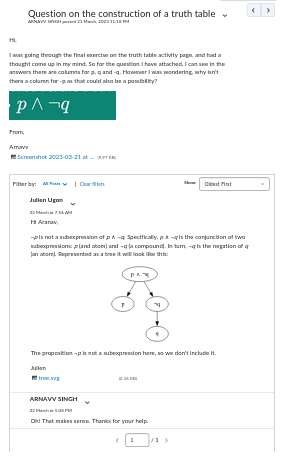
Construct Truth Tables
Learn
Validate
Reflections and Observations
Our result distribution in 2024
Beyond Individual units
- Improved Grade distributions and Fail rates across maths units
- Pathway for keen students (one is starting her PhD in December!)
- Mathematics Yearbook!
- Resilience to change
- Enhanced reputation within school/faculty
When I started this subject, I was terrified, I thought it was going to be really difficult and I ruled [out] almost immediately trying to get a HD. But when you open yourself up to learn, and become willing to experience new things, you get to learn about your own capabilities that you often don’t even know you have.
I learned to push the limits of my capabilities in this subject to achieve far greater outcomes than I anticipated and I’m incredibly proud of my hard work to achieve such a high level of completion in this subject.
the most important thing I learned in this subject is that maths is used in EVERYTHING. Every aspect of your life involves mathematics and things that don’t seem like maths (graph theory) are indeed maths. I didn’t realise the importance of maths in my degree, or the career I want prior to starting this degree. I was a bit confused why I had to study this subject, which was very quickly changed when I started actually learning.
I have a horribly tough time picking my favourite for this subject [...] But, if I could pick my own topic module, I would pick that. That was one of the coolest things I’ve made in my degree so far, and its up there with creating malware. So it was pretty cool!
Mathematics has never been my strongest subject. Having left high school nine years ago, I was a little concerned with this unit, the provided readings helped get me started before engaging in this unit.
I would be delighted to discuss each of my submissions in detail to highlight the reasons behind my High Distinction achievement. However, I genuinely believe that by reviewing them, you will readily recognise the tremendous effort I have dedicated to this unit. I want to emphasise that my intention is not to boast but rather to express my sense of accomplishment, one where I am very proud of.
his unit has taught me how to genuinely appreciate mathematics, fostering the ability to read and comprehend even the most challenging topics with a greater level of conceptualization – though not amazing yet, it has put a little confidence in me and a little passion to pursue it more!
I have come to realise the immense importance of mathematics in various fields. It is a fundamental tool that permeates every aspect of our lives. I struggle to think of any discipline that would not benefit from its application.
I believe this is the MOST important part that helped with my learning is the OnTrack feedbacks, I felt that the feedback process really helped me my learning. Most importantly, it was very motivating and so helpful to know where to look to when you needed help.
I do believe that allowing me to use programming with the mathematics really helped my understanding. Of course, I am studying Data Science and I have been programming for a while now. Being able to translate the mathematical problem into a coding problem really deepened my understanding because I can now think deeply about it – this actually then improved my ability to understand mathematics without translating it into a programming problem. I found this helped a lot.
This unit has had a profound impact on me, and I genuinely mean that. It has made me realise many things and ignited a strong passion within me [...]. This unit has sparked a significant amount of curiosity in a subject I had previously overlooked, and for that, I am immensely grateful.
References
- Barr, D., and Wessel, W., 2017. “Rethinking Course Structure: Increased Participation and Persistence in Introductory Post-Secondary Mathematics Courses.” Fields Mathematics Education Journal 3 (1). https://doi.org/10.1186/s40928-017-0004-8.
- Bloom, B.S. 1971. “Mastery Learning.” In Mastery Learning: Theory and Practice, edited by Block James H. Holt McDougal.
- Bloom, B.S., 1984. “The 2 Sigma Problem: The Search for Methods of Group Instruction as Effective as One-to-One Tutoring.” Educational Researcher 13 (6): 4–16. https://doi.org/10.3102/0013189x013006004.
- Guskey, T.. 2007. “Closing Achievement Gaps: Revisiting Benjamin s. Bloom’s "Learning for Mastery".” Journal of Advanced Academics 19 (1): 8–31. https://eric.ed.gov/?id=EJ786608.
- Hattie, J., and Timperley, H., 2007. “The Power of Feedback.” Review of Educational Research 77 (1): 81–112. https://doi.org/10.3102/003465430298487.
- Kantathanawat, T., Ussarn, A., Charoentham, M., and Pimdee, P., 2025. “Integrating Mastery Adaptive and Problem-Solving (MAPS) Digital Technology Skills into a Thai Community College Student Learning Model.” Educational Process International Journal 14 (1). https://doi.org/10.22521/edupij.2025.14.13.
- Vespone, B.. 2023. “Co-Constructing Teaching and Learning in Higher Education: A Literature Review of Practices and Implications.” Journal of Learning Development in Higher Education, no. 27. https://doi.org/10.47408/jldhe.vi27.997.